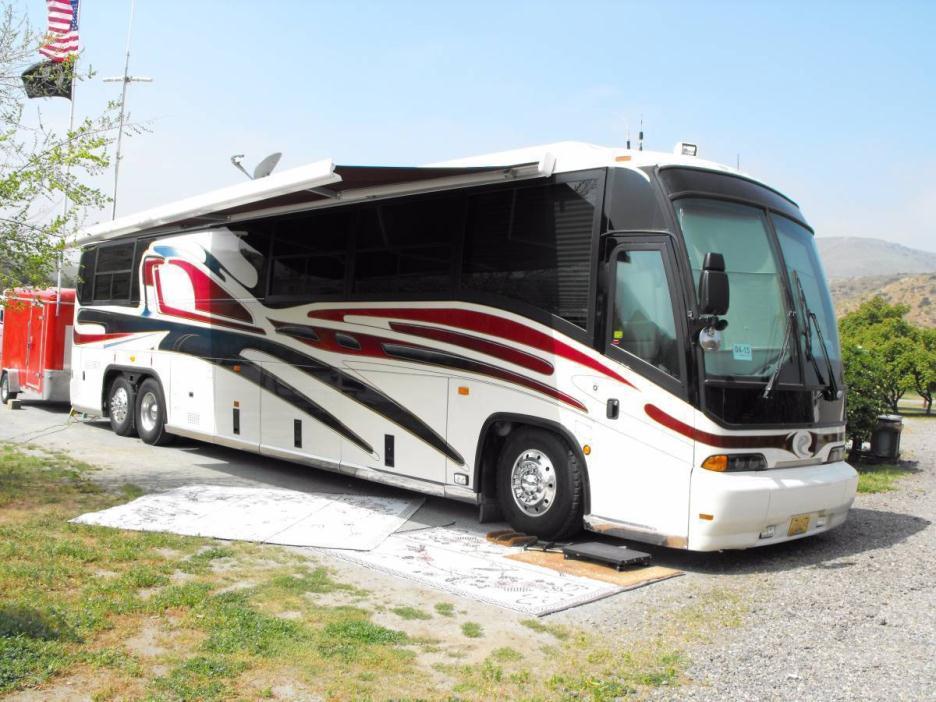
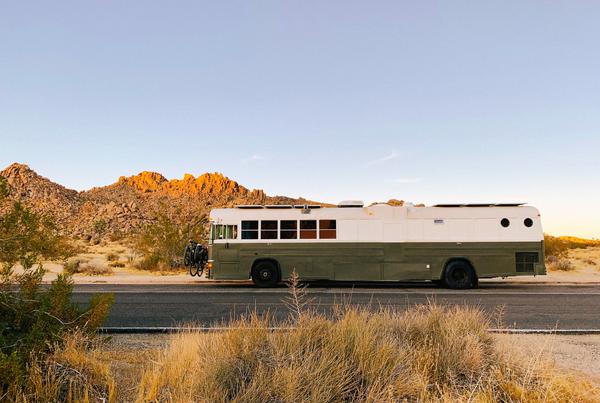
Turning a bus into a camper is less about adding everything and more about choosing what earns its place. I have seen plenty of conversions that looked impressive but became awkward after a week on the road. The best builds focus on daily comfort, reliable systems, and layouts that match how you actually travel.
I put together these camper bus conversion ideas around the areas I would plan first: living space, power, cooking, sleeping, and outdoor use. Small decisions early can save a lot of frustration later.
Camper bus conversion priorities
- Plan the layout around your real travel habits.
- Choose storage and power systems before decorating.
- Build for easy maintenance, not just good photographs.
Minimalist Camper Bus Interior Design
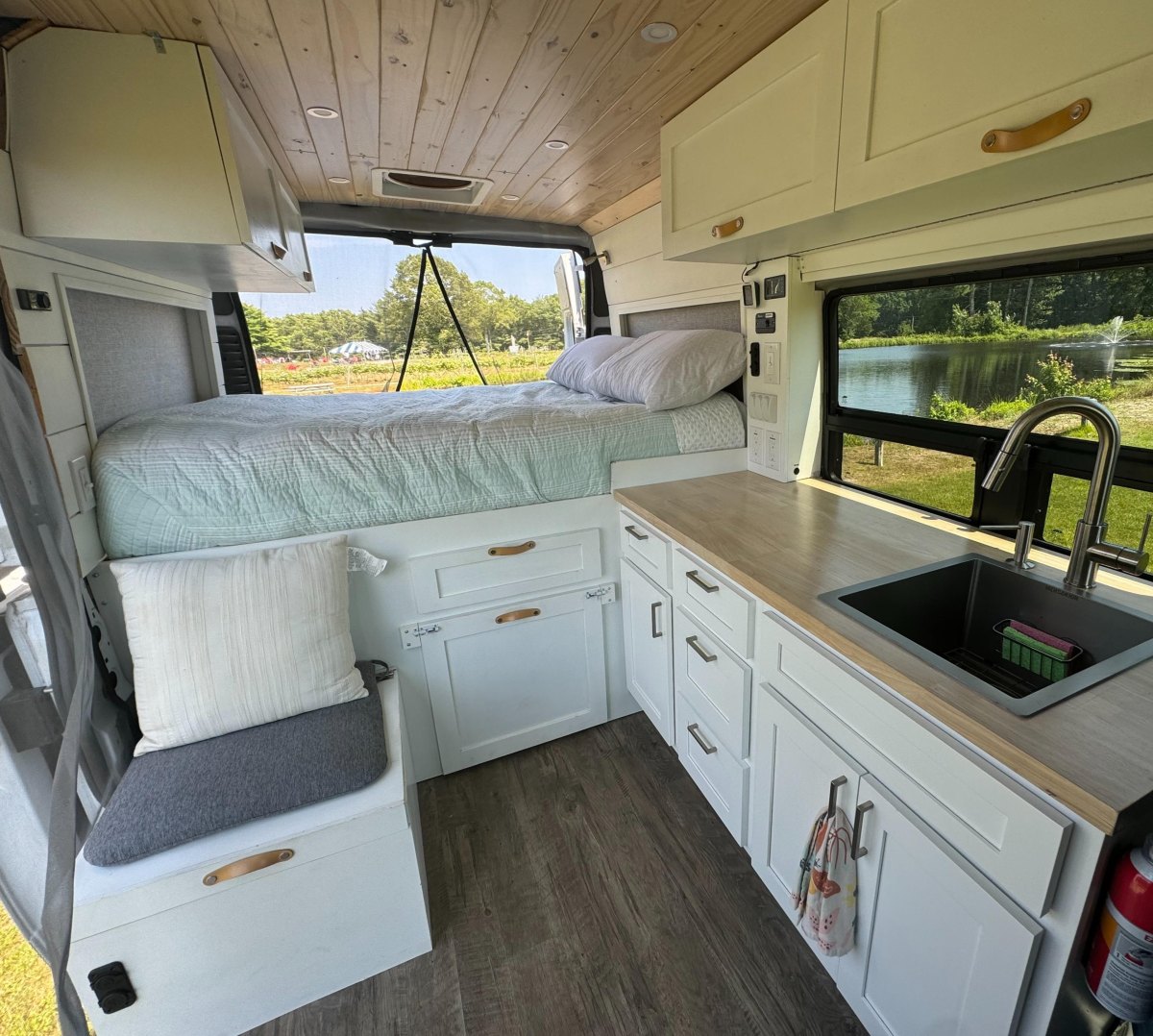
A minimalist camper bus interior gives you room to move, which matters more than filling every corner. I prefer multi-use furniture because a bench that becomes a workspace or dining area earns its footprint twice.
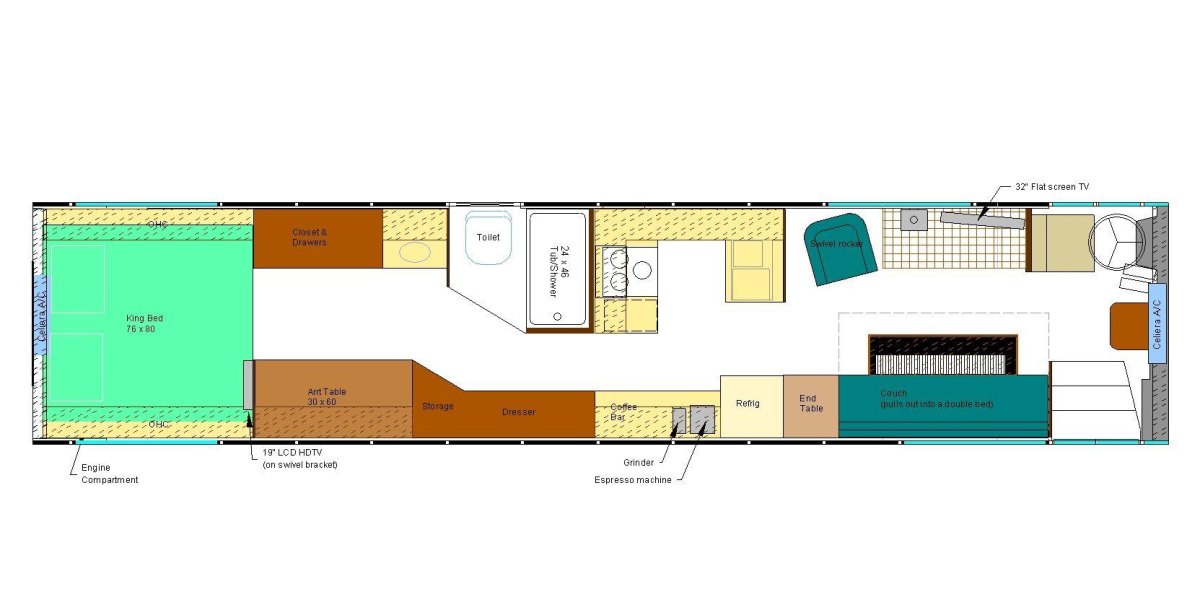
When I sketch a small travel space, I start with walking paths, ventilation, lighting, and where I will put things after a long day. A clean layout is easier to live with than a crowded one. Modern conversion guides also emphasise planning around limited space and practical use rather than copying a house interior.
Off-Grid Solar Powered Camper Setup
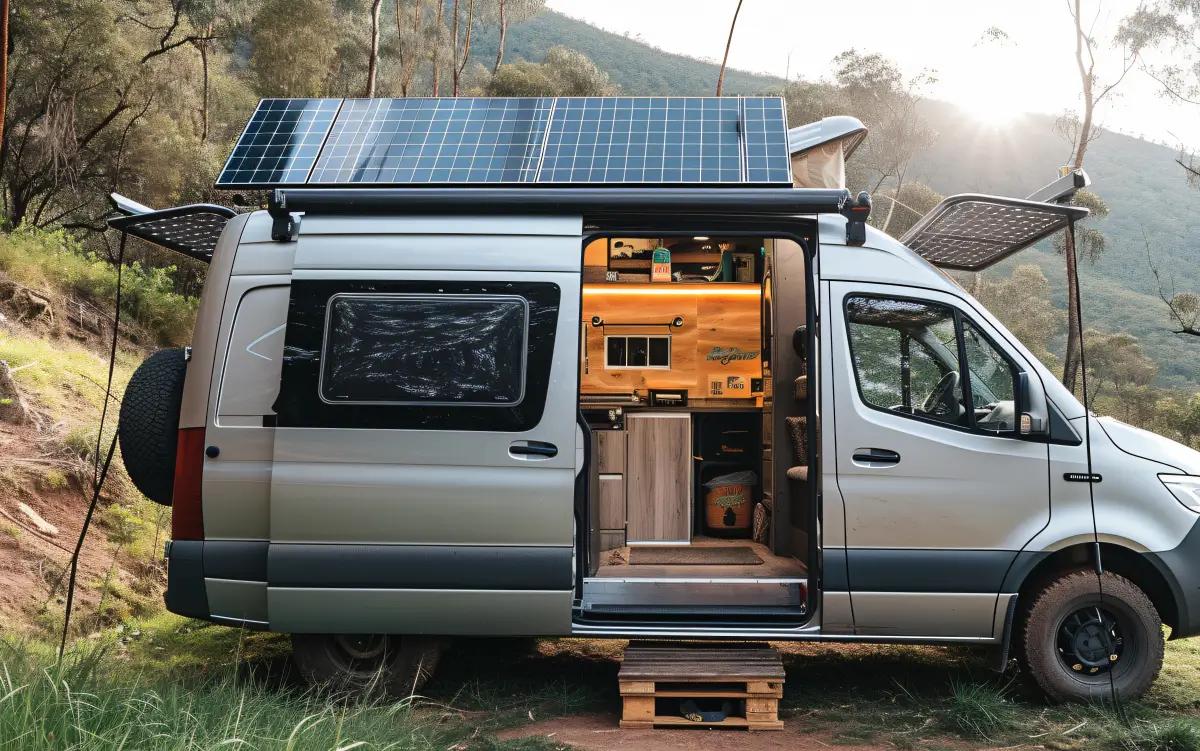
An off-grid setup works best when the electrical system matches your habits. I would rather have a correctly sized solar power system than an oversized collection of equipment that adds cost and complexity.
Before choosing batteries, panels, or appliances, I list what I actually use: lights, refrigeration, charging, cooking, and heating controls. The goal is predictable energy, not a complicated technical project.
My practical tip
Write down your daily power needs before buying equipment. It is much easier to upgrade a plan than to rebuild wiring later.
Compact Kitchen and Storage Solutions
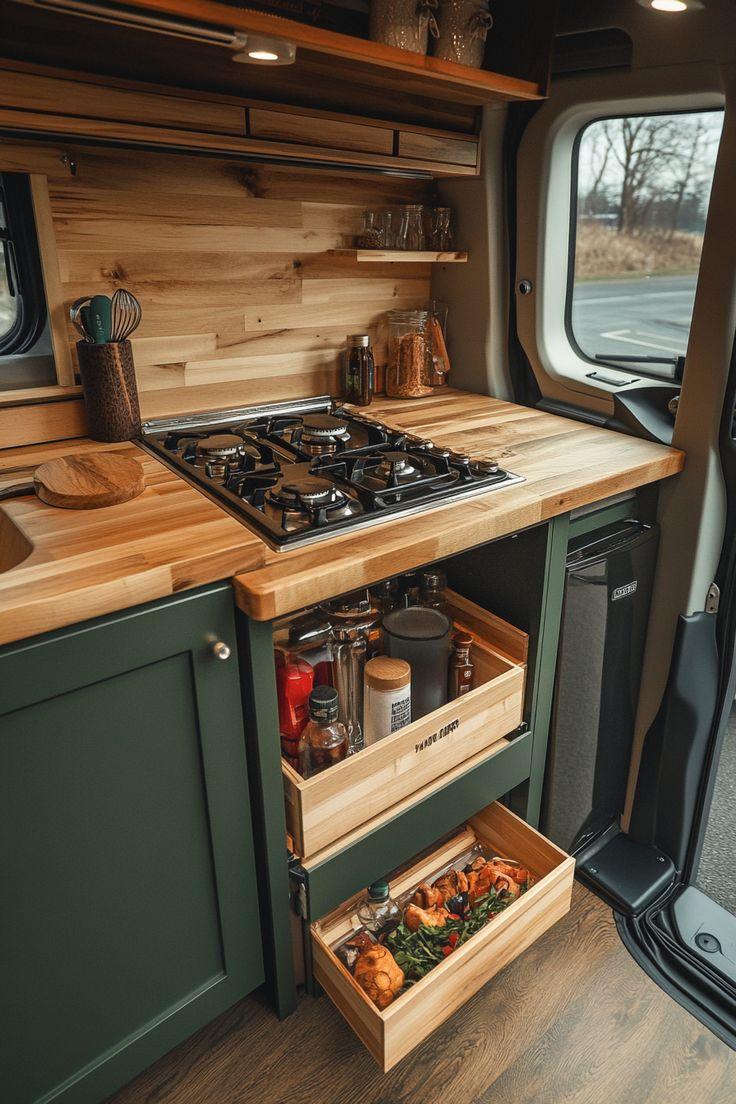
A compact kitchen should make cooking simple, not turn every meal into a puzzle. I like layouts where the sink, cooking area, and storage have a clear relationship because efficient kitchen design saves time every day.
Drawers, vertical storage, and secure cupboards usually beat large cabinets in a moving vehicle. Every item needs a home, especially when roads are rough and things shift around.
| Feature | Why it matters |
|---|---|
| Pull-out drawers | Easy access without emptying cupboards |
| Foldable surfaces | Creates workspace when needed |
| Vertical storage | Uses unused wall space |
Cozy Sleeping Area and Convertible Beds
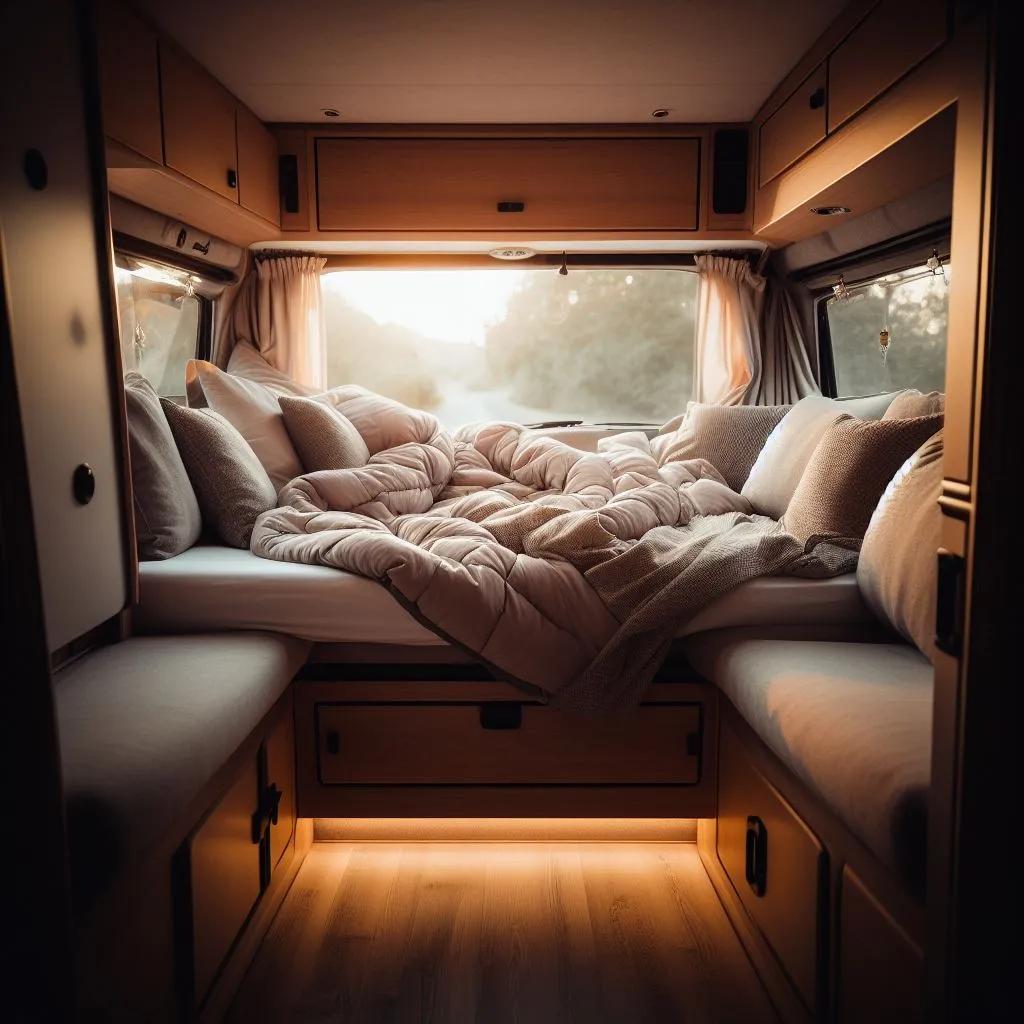
The bed is one of the decisions that shapes the entire conversion. A fixed bed is convenient, while a convertible design gives more daytime space. I always consider sleeping comfort before adding decorative features because tired travellers notice a poor bed quickly.
Convertible beds, dinettes, and folding systems can make small interiors work harder. The right choice depends on whether you spend more time relaxing inside or simply sleeping after outdoor adventures.
Convertible bed advantages
- Creates flexible daytime space.
- Works well in smaller buses.
Convertible bed drawbacks
- Requires daily setup.
- Needs careful mechanical design.
Adventure-Ready Outdoor Camper Features
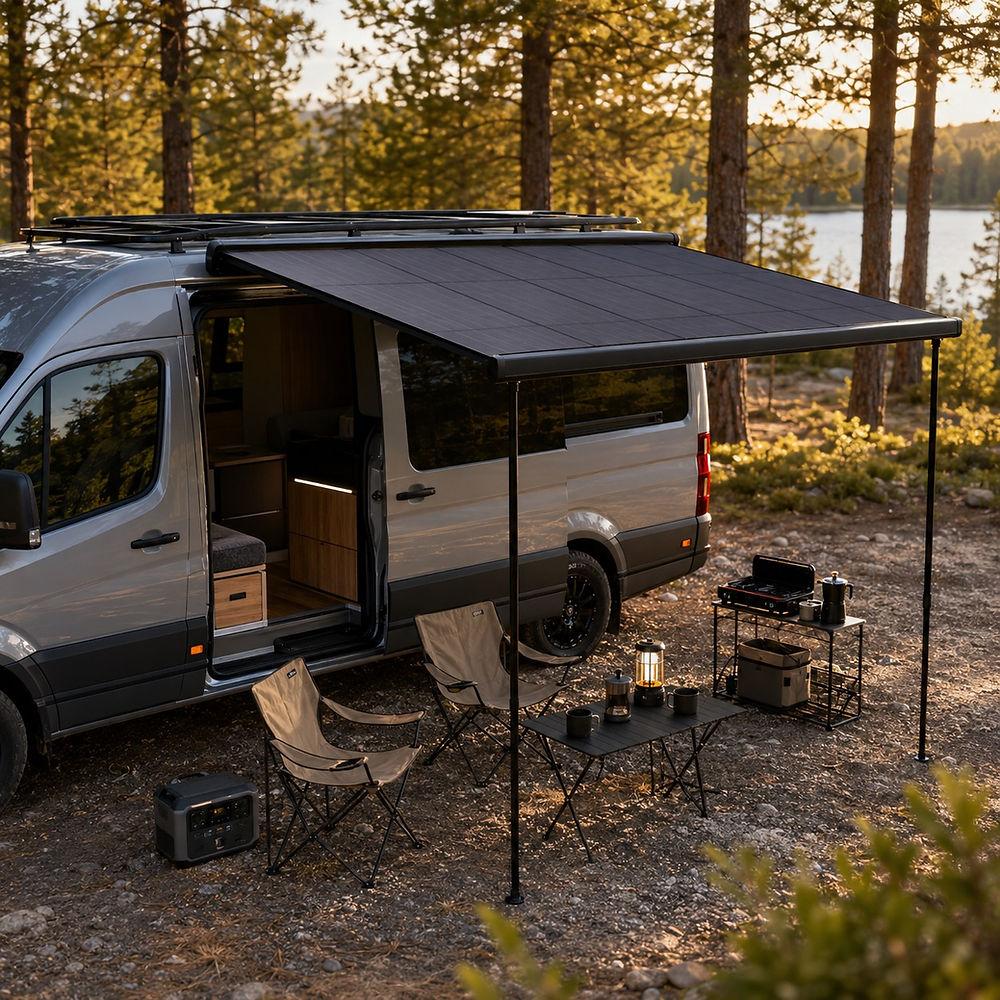
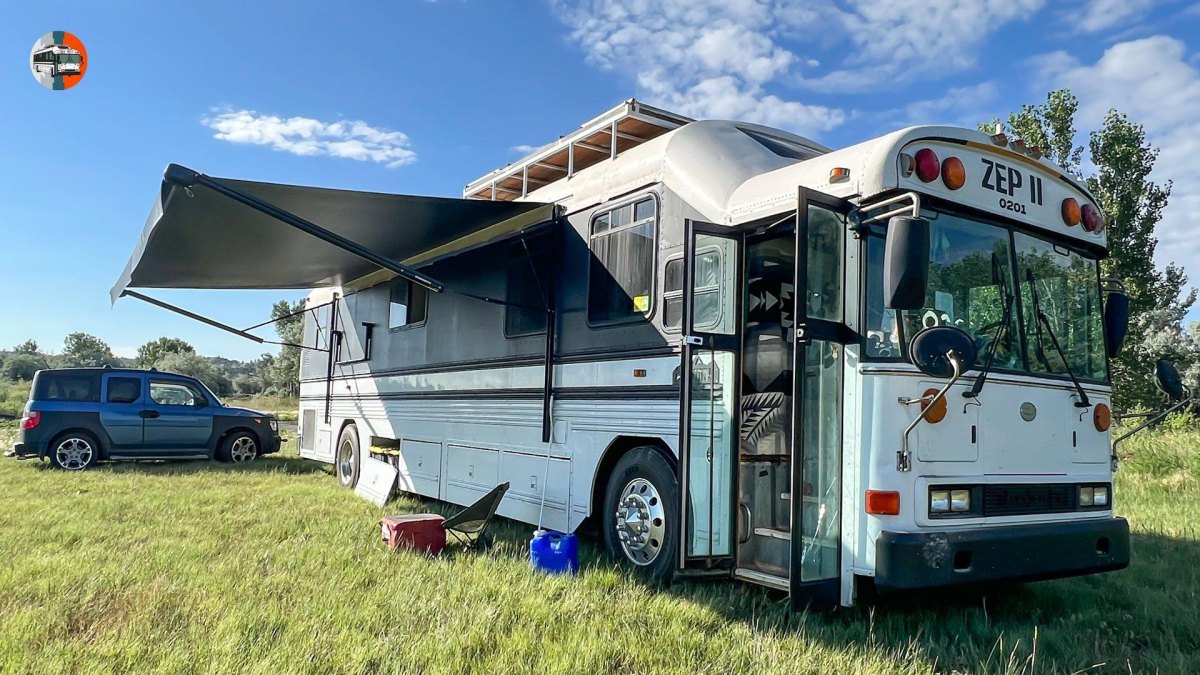
The best camper bus features are often the ones that make outdoor living easier. An awning, outside storage, recovery gear, or a simple camp table can transform a stop into a comfortable base. I focus on practical outdoor upgrades rather than equipment that rarely gets used.
I also leave space for maintenance supplies because travel vehicles always need attention. A small repair kit and organised storage can prevent a minor problem from ruining a trip.
One upgrade I would prioritise
A well-designed exterior storage system is worth the effort. Keeping muddy shoes, tools, and outdoor equipment outside the living area keeps the camper far more pleasant.