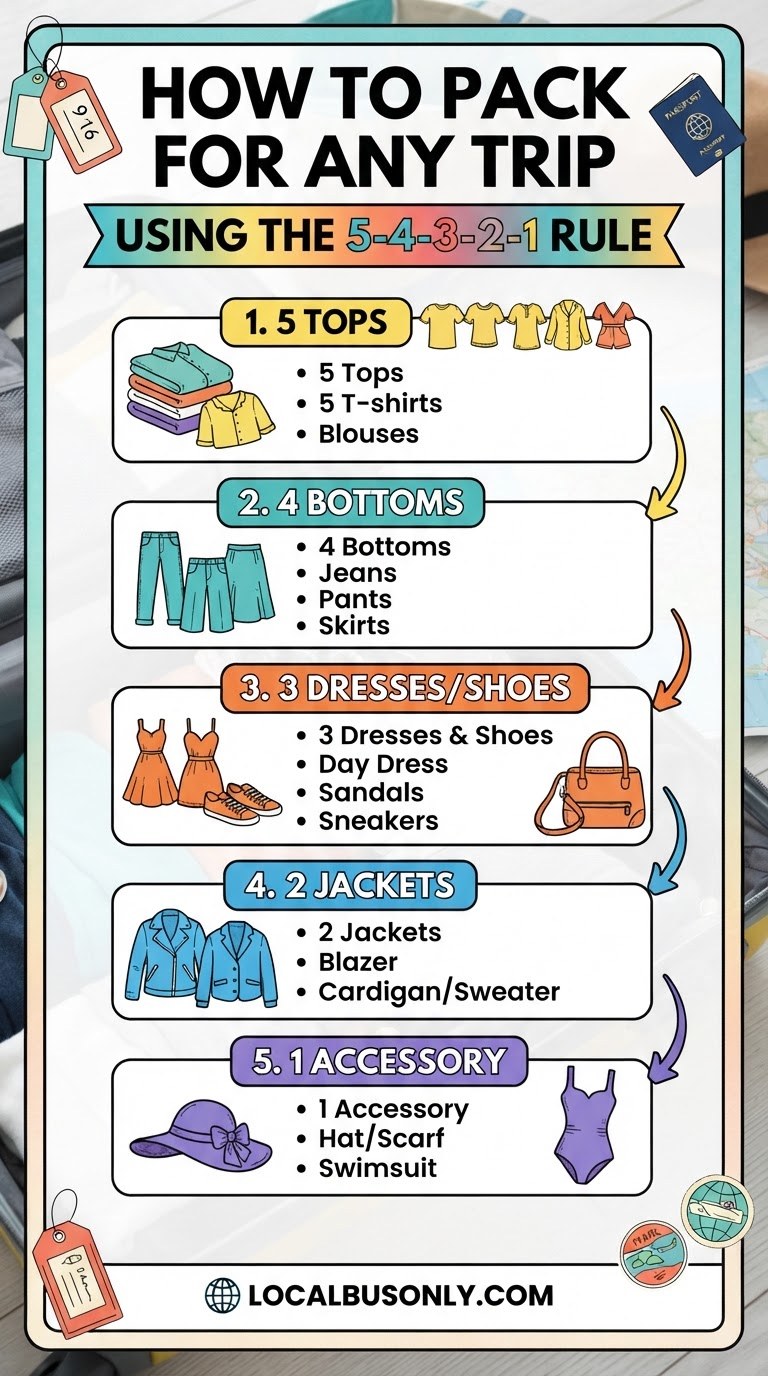
Packing gets difficult when every possible situation starts competing for space in your bag. I have found that the 5-4-3-2-1 packing method works because it turns a vague question — what might I need? — into a simple clothing plan I can actually follow. It is not about owning the smallest suitcase; it is about making every item earn its place.
The classic 5-4-3-2-1 wardrobe formula
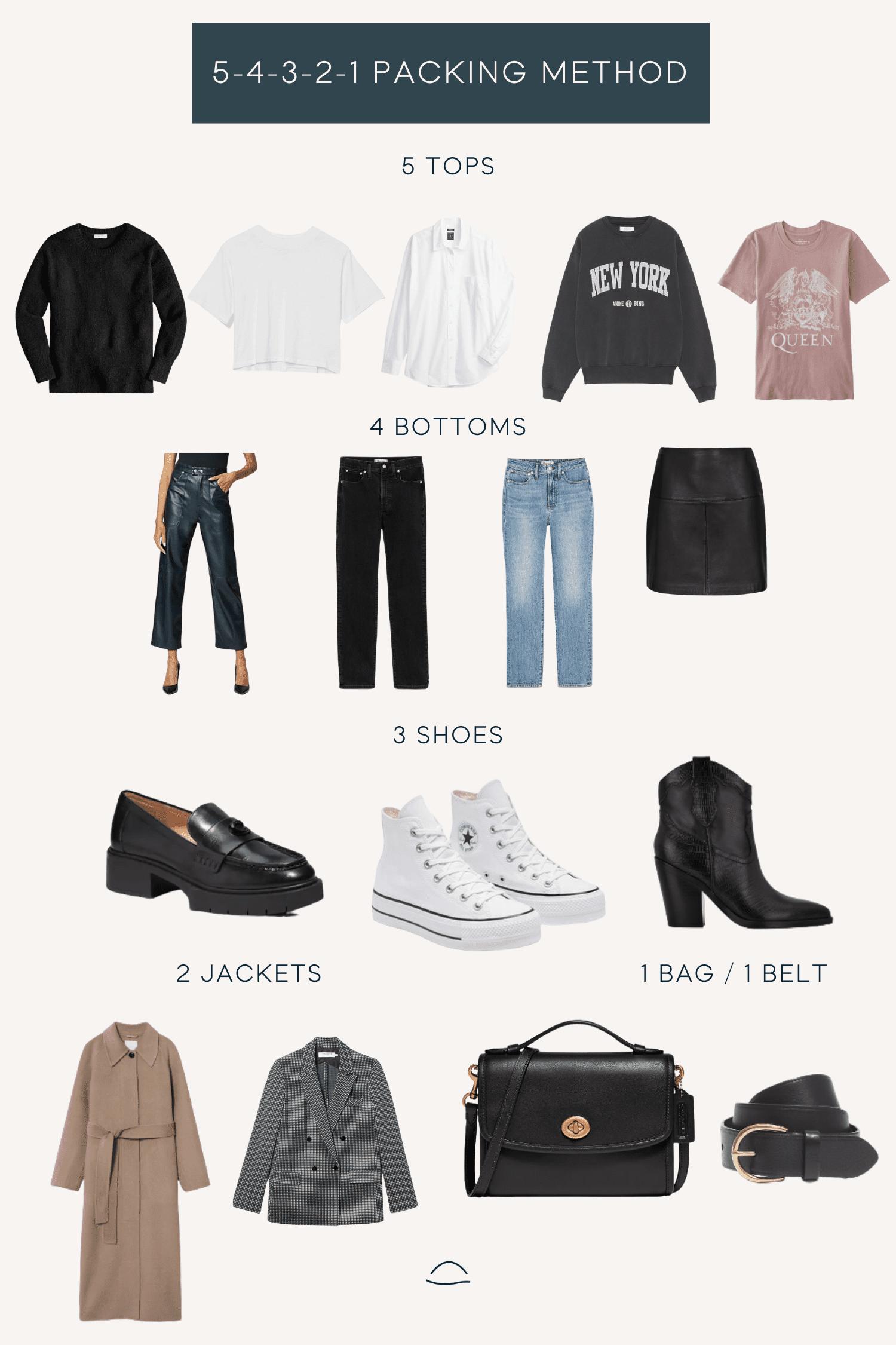
The first image shows the basic structure I return to when I need a reliable packing starting point: five tops, four bottoms, three pairs of shoes, two jackets, and one bag with one belt. I like this approach because it creates a small wardrobe rather than a pile of unrelated clothes.
The important part is not copying those exact colours or pieces. The method works when the items cooperate. Five tops should mix with most bottoms, shoes should cover different levels of formality, and outer layers should handle the weather you are actually expecting.
After years of packing for trips, I have learned that the problem is rarely having too little clothing. The problem is bringing five versions of the same thing. A black knit, a simple shirt, a comfortable sweatshirt, and a light tee can all have different jobs.
My packing rule is simple: if I cannot imagine wearing an item at least twice, it probably stays home.
The 5-4-3-2-1 method gives me a framework, but I still adjust it for the trip. A beach week and a city weekend need different versions of the same idea.
Building four bottoms that create more outfits
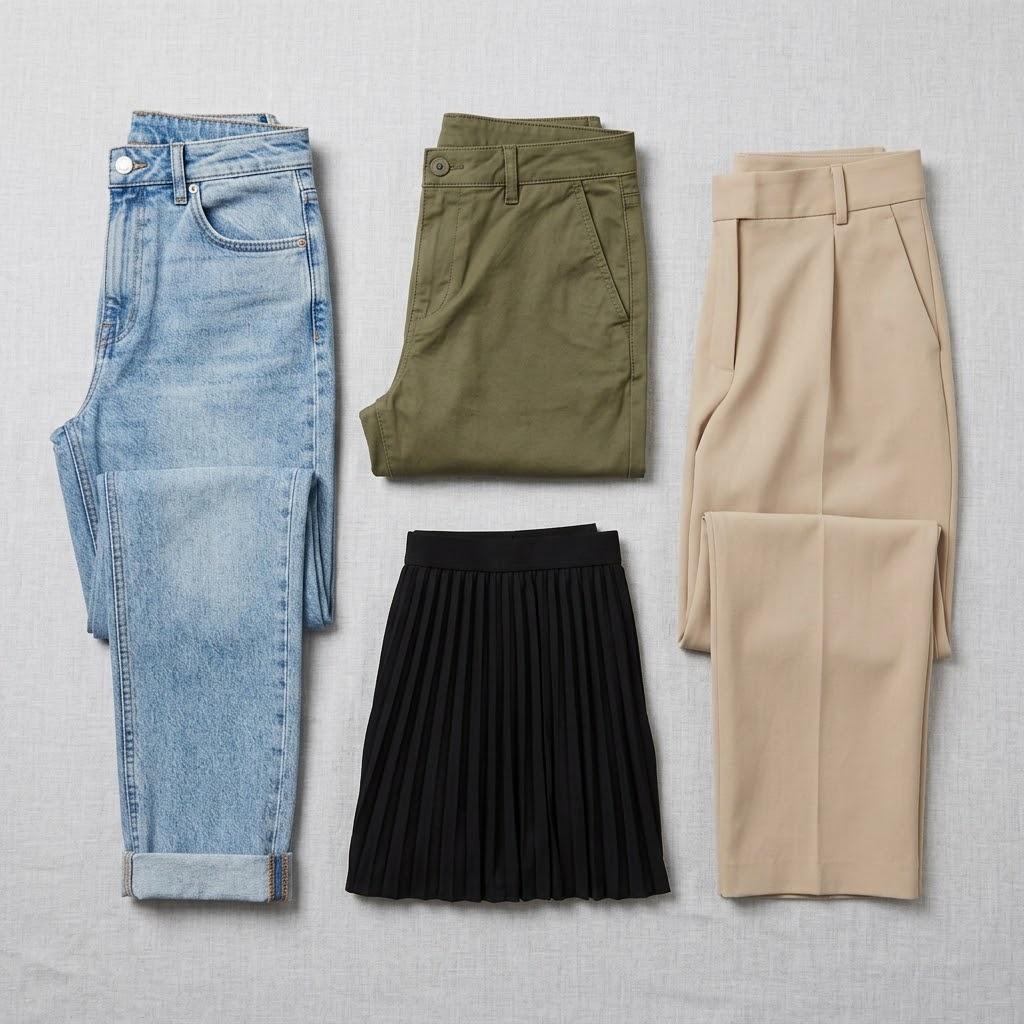
The second image focuses on the foundation of the method: four bottoms that carry the rest of the wardrobe. This is where many packing lists succeed or fail. People often choose tops first, then discover nothing works together below the waist.
I prefer bottoms that can handle ordinary travel days: walking, sitting on transport, eating out, and unexpected changes in plans. A pair of jeans, a darker trouser, a comfortable casual option, and a skirt or lighter piece can create very different outfits without adding much weight.
- Choose repeatable colours: navy, black, denim, olive, beige, and grey are easier to combine.
- Think about fabric: quick-drying and wrinkle-resistant materials are useful when laundry opportunities are limited.
- Pack for your real itinerary: four elegant trousers are not helpful on a hiking trip.
I have made the mistake of packing for imaginary occasions. The fancy dinner that might happen usually does not outweigh the everyday comfort of pieces I will definitely wear.
Three shoes are enough when each pair has a job
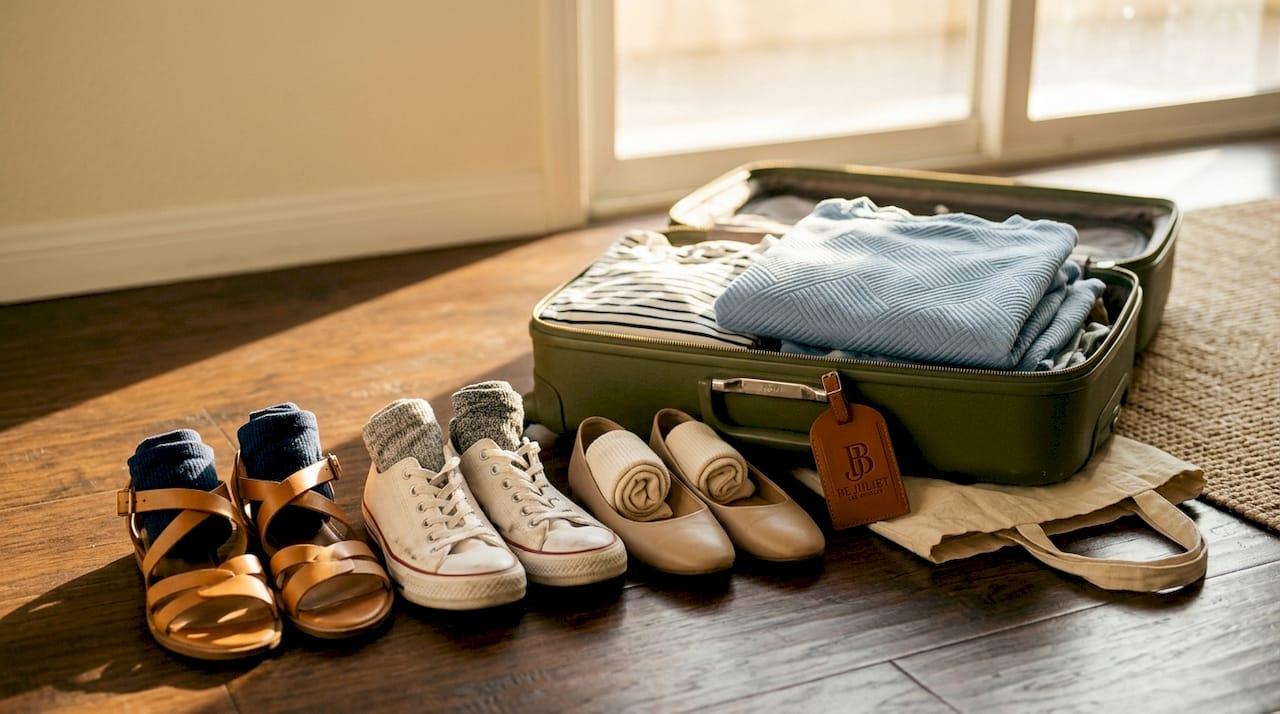
The third image represents one of the hardest packing decisions: shoes. The 5-4-3-2-1 method allows three pairs, but I treat that as a maximum rather than a target. Shoes take up the space that travellers usually regret losing.
A useful combination is often a comfortable walking shoe, a slightly smarter option, and a weather-specific pair. The exact choices depend on the trip. For a warm city break, sandals may replace boots. For a winter destination, practical footwear matters more than having a dressier option.
I choose shoes by asking one question: what problem does this pair solve? If the answer is only that they look nice, they are competing against something more useful.
Before leaving home, I also wear the bulkiest pair during the journey. That small habit leaves more room in my bag and saves me from squeezing heavy footwear into every corner.
The method is not about travelling without style. It is about making sure style fits inside a realistic suitcase.
Two jackets that cover changing weather
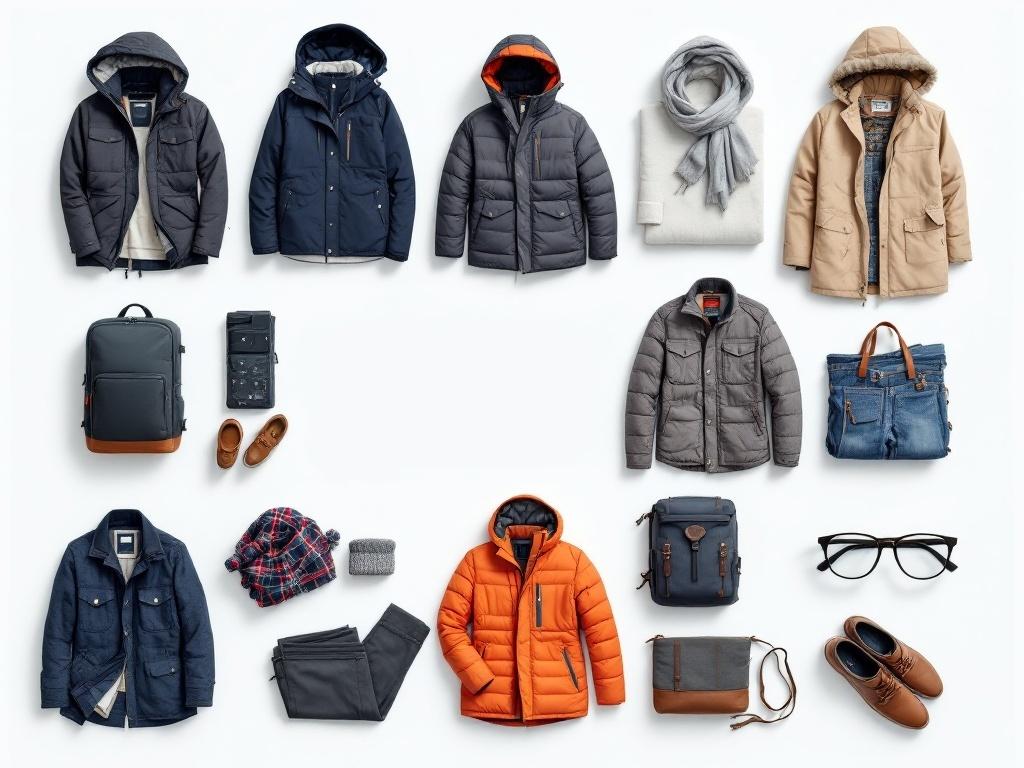
The fourth image highlights the outer-layer part of the formula: two jackets that can handle different conditions. Layers are where this packing method becomes especially practical because weather rarely follows our plans perfectly.
I usually think in terms of one protective layer and one comfortable layer. A rain-resistant coat, warm jacket, or insulated layer handles the outdoors. A blazer, cardigan, fleece, or lighter jacket changes the feel of an outfit without adding much bulk.
For colder trips, I focus on layering rather than carrying one enormous piece. A warm base, mid-layer, and outer shell often gives me more flexibility than a single heavy coat.
- Check the forecast close to departure.
- Consider whether your accommodation has laundry.
- Wear the largest layer while travelling when possible.
I have found that packing anxiety often comes from trying to prepare for every possible temperature. Two thoughtful jackets usually solve more problems than five random extras.
Adapting the method for warm-weather escapes
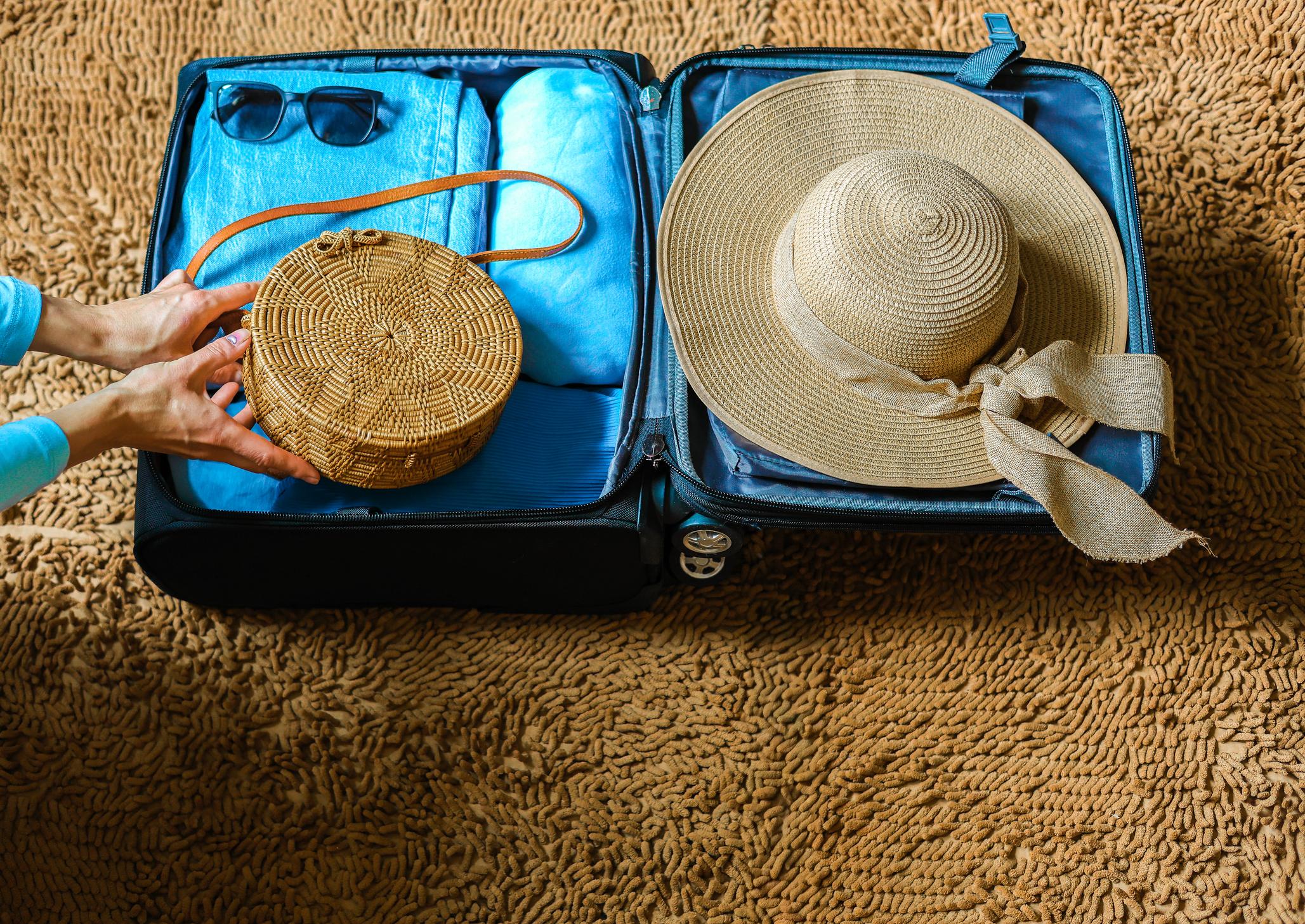
The fifth image shows a lighter version of the same idea: a suitcase prepared for a warmer trip. The 5-4-3-2-1 packing method is not a winter-only checklist; it is a way of limiting choices while keeping enough variety.
For warm destinations, I usually make fabrics do more work. Lightweight tops, breathable bottoms, and pieces that can move from daytime exploring to an evening meal are more valuable than separate outfits for every activity.
The one bag and one belt rule is surprisingly useful here. Accessories can multiply outfits without taking much room, but only if they match most of what you brought. A versatile bag is often more important than a collection of small extras.
I also leave a little empty space. A suitcase packed completely full is annoying on day one and worse on the way home. Trips have a habit of adding small things: gifts, local products, or simply laundry that no longer folds as neatly as it did at home.
The best packing system is the one that still works after a few days of real travel.
A good packing method should make the days before a trip calmer, not become another task to perfect. I use the 5-4-3-2-1 approach as a starting point, then remove anything that does not make the journey easier.





Frequently Asked Questions
What is the 5-4-3-2-1 packing method?
It is a travel packing formula based on five tops, four bottoms, three shoes, two jackets, and one bag plus one belt. It creates a compact wardrobe with enough variety for many trips.
Can I change the numbers in the 5-4-3-2-1 method?
Yes. The numbers are a guide, not a rule. I adjust the formula for trip length, climate, activities, and laundry access.
Does this method work for carry-on travel?
It can work very well for carry-on trips because it encourages repeatable outfits and reduces unnecessary extras.