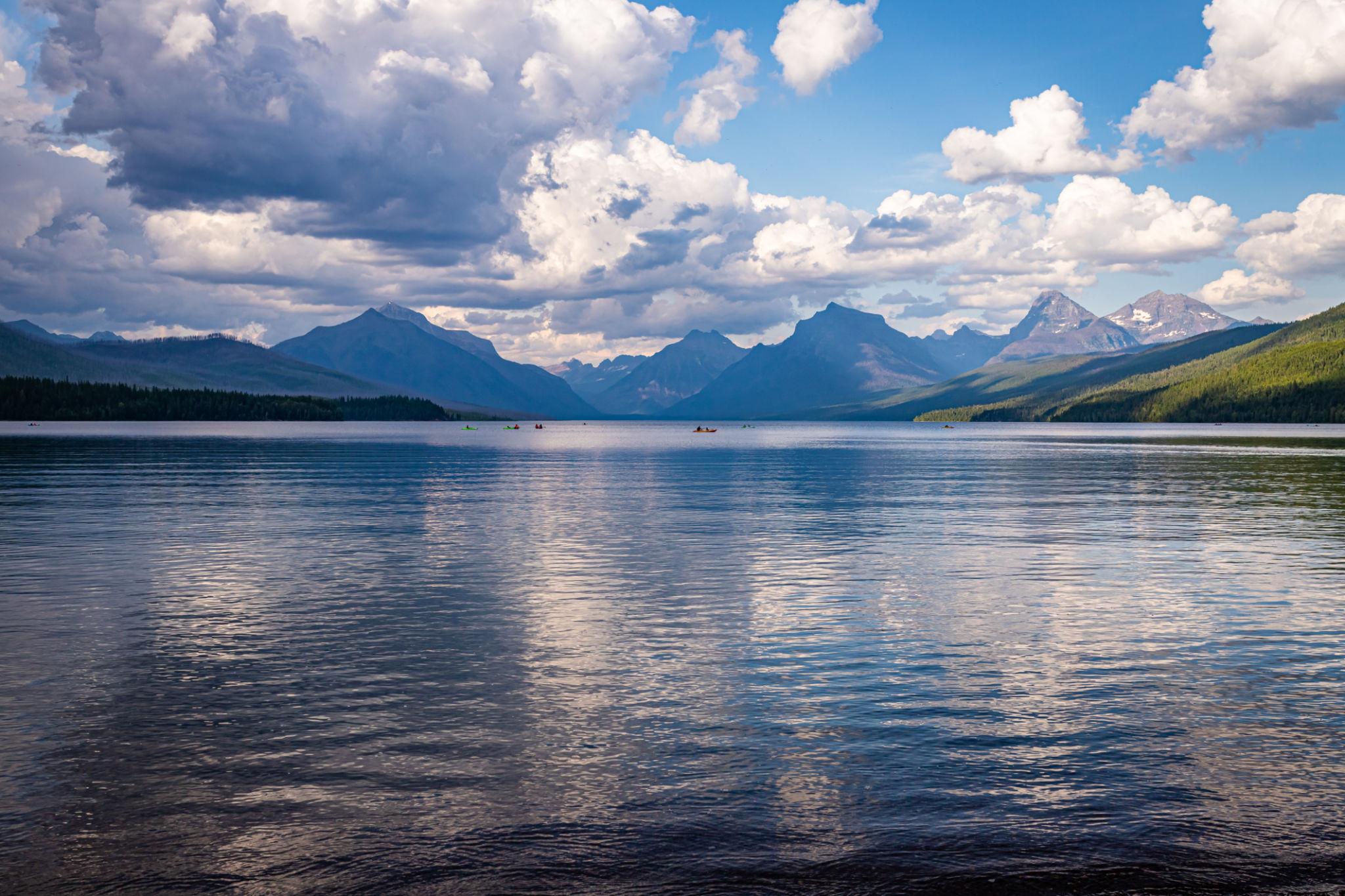
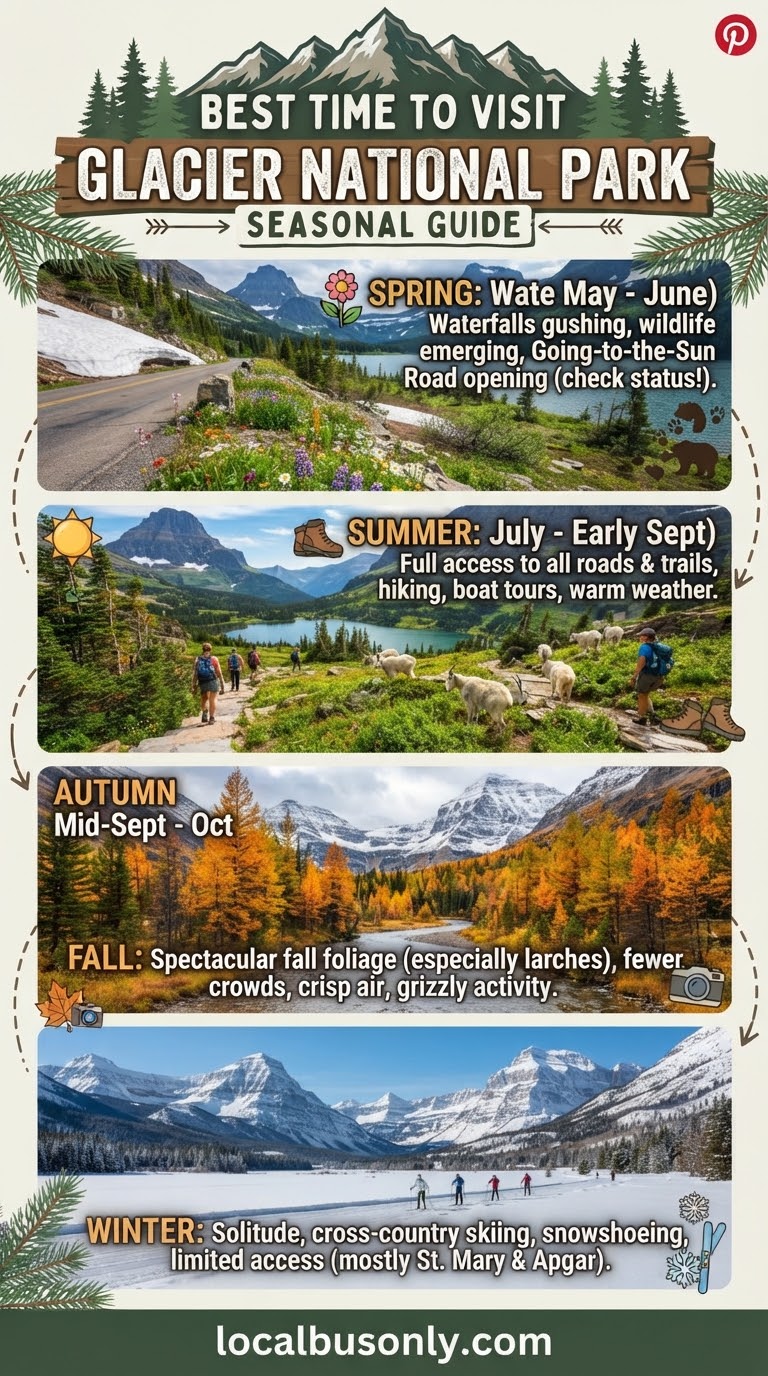
Choosing the best time to visit Glacier National Park depends on what you actually want to do there. I have found that the park changes dramatically between snow season, wildflower summer, busy hiking months, and quieter autumn days, so the right month matters more than chasing a single perfect answer. These ten views show the different experiences you can plan for.
Late summer lake views when the high country opens up
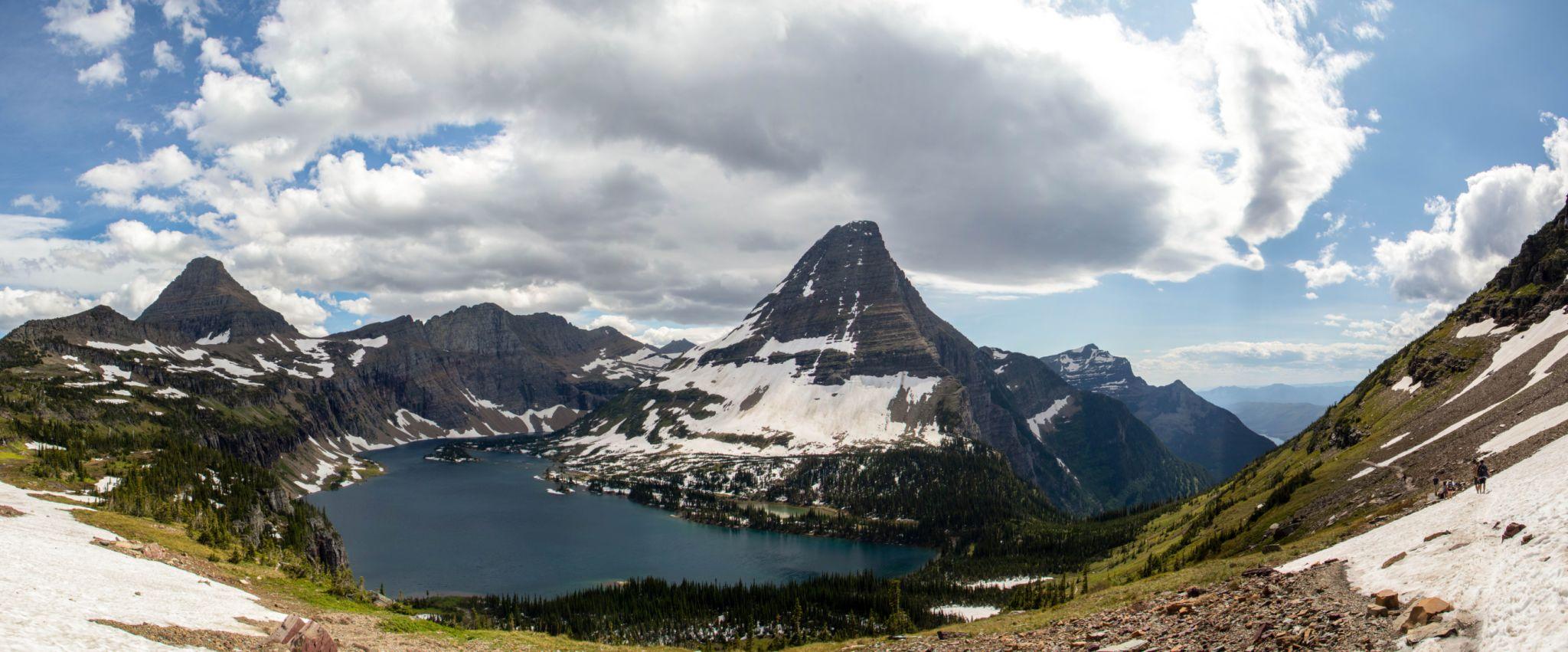
Late July and August are the classic Glacier months, especially for visitors who want the park’s high trails, mountain passes, and alpine lakes. The snow has usually pulled back from many higher routes, and the landscape feels accessible rather than locked behind winter conditions.
This kind of mountain scene is why many people choose summer. The trade-off is crowds. Popular roads and trailheads can fill early, and I would not plan a midday arrival at the busiest places if I can avoid it.
My practical tip: I would rather start a hike at dawn than spend my morning circling for parking. The extra hour of sleep rarely beats an easy start.
For first-time visitors, summer is the safest choice because it gives the widest range of possible activities.
Wildflower season for the softest alpine scenery
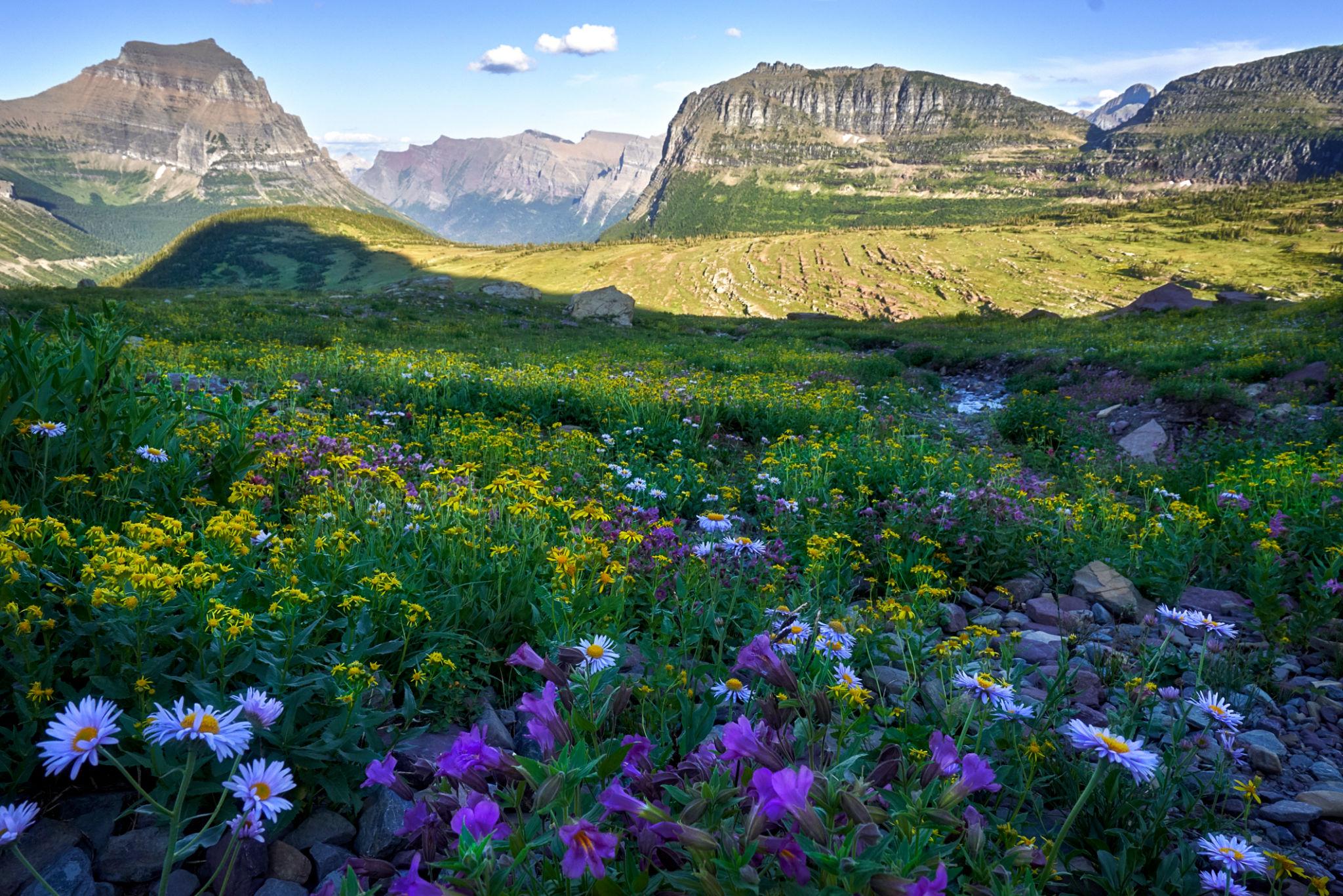
Mid-summer wildflower season is one of Glacier’s most rewarding windows. Meadows can turn bright with colour as alpine plants bloom after the snow retreats. This is the period I would choose for travellers who want slower walks, photography, and a landscape that feels alive.
The important thing to remember is that wildflower timing is not a fixed calendar event. Snow levels, elevation, and weather all shift the show. Lower areas bloom earlier, while higher meadows may wait until later.
- Best for: gentle hikes, scenic stops, and families.
- Expect: changing trail conditions at higher elevations.
- Pack: layers, because mountain weather ignores the forecast you checked at breakfast.
Clear mountain days for long-distance hiking
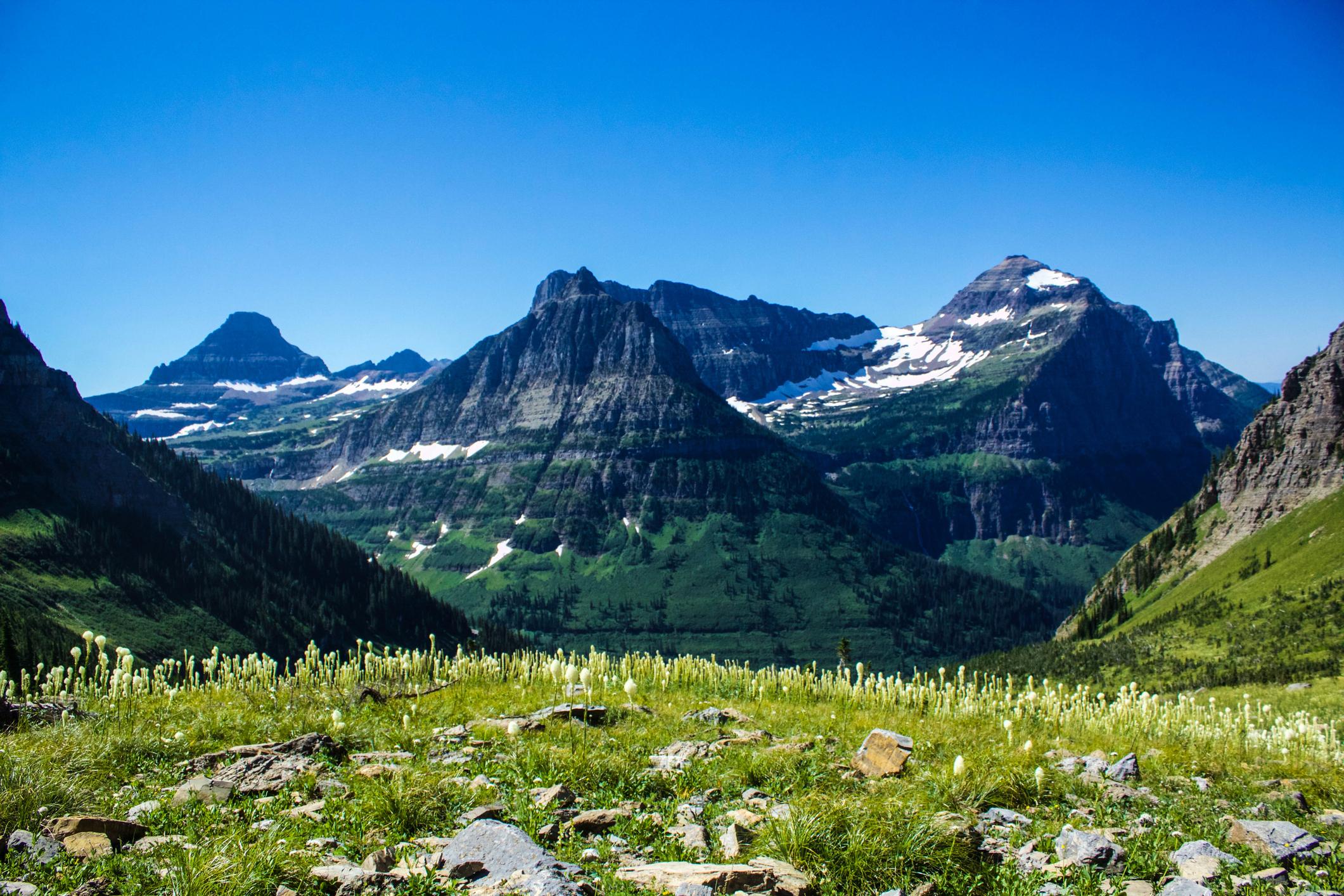
Peak hiking season brings the biggest choice of trails. This is the time for visitors who have a list of ambitious routes and want the best chance of reaching higher viewpoints.
I like this season because the park feels fully switched on, but I also plan around the crowds. Glacier rewards patience. A quieter early morning can completely change the experience compared with arriving when everyone else does.
The mountains shown in this style of landscape are a reminder that elevation matters. A warm valley day does not mean a warm exposed ridge. I always carry a light extra layer, even when the forecast looks friendly.
Who should choose this time: hikers who care more about trail access than solitude.
Shoulder season trails for fewer people
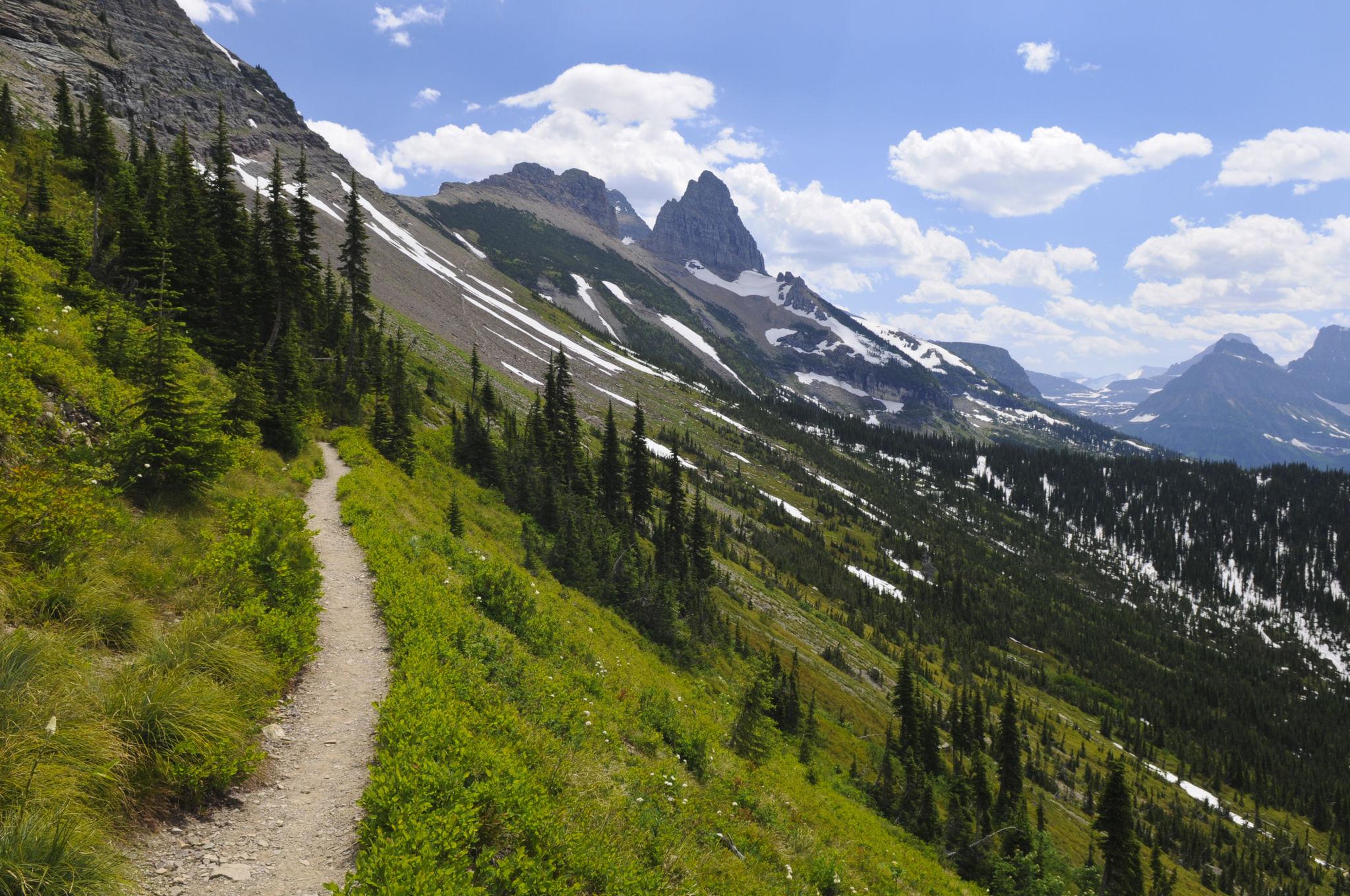
Early autumn is my favourite compromise for many national park trips. You may lose some high-elevation access, but you gain cooler temperatures and a quieter atmosphere.
This kind of trail setting works well for visitors who do not need every route open. I find shoulder seasons easier to enjoy because I spend less time managing crowds and more time actually looking around.
Before travelling, I check current conditions rather than relying on last year’s dates. Mountain parks are not machines with predictable schedules.
- Confirm what areas are open.
- Choose flexible hiking plans.
- Carry layers for rapid weather changes.
Autumn colours and a quieter Glacier experience
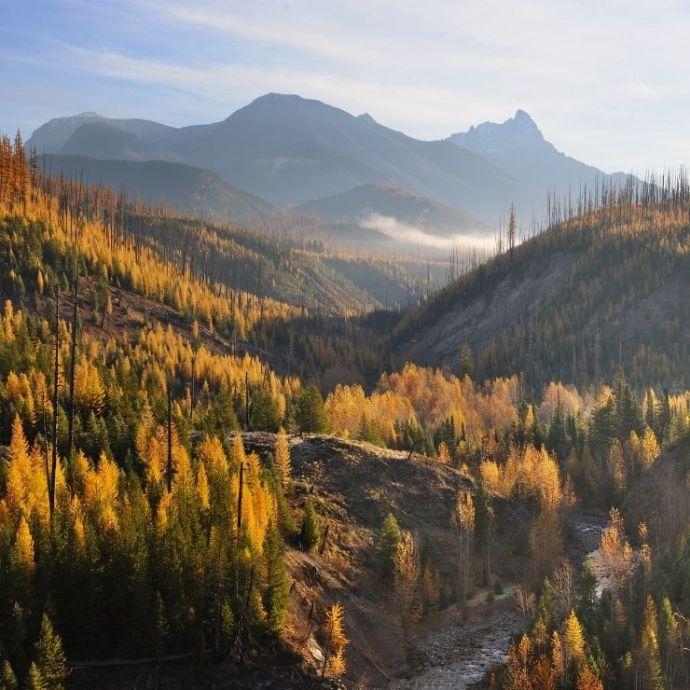
September and early October can bring a completely different character. Forests take on gold tones, mornings feel crisp, and the pace slows down after the busiest summer period.
I often recommend this period to travellers who enjoy scenery more than ticking off every famous trail. The park does not become less beautiful when summer ends; it simply asks you to adjust expectations.
The compromise is that some facilities and routes operate on seasonal schedules. A little planning saves a lot of disappointment, especially for visitors travelling from far away.
Snowy mountain views for a different kind of visit
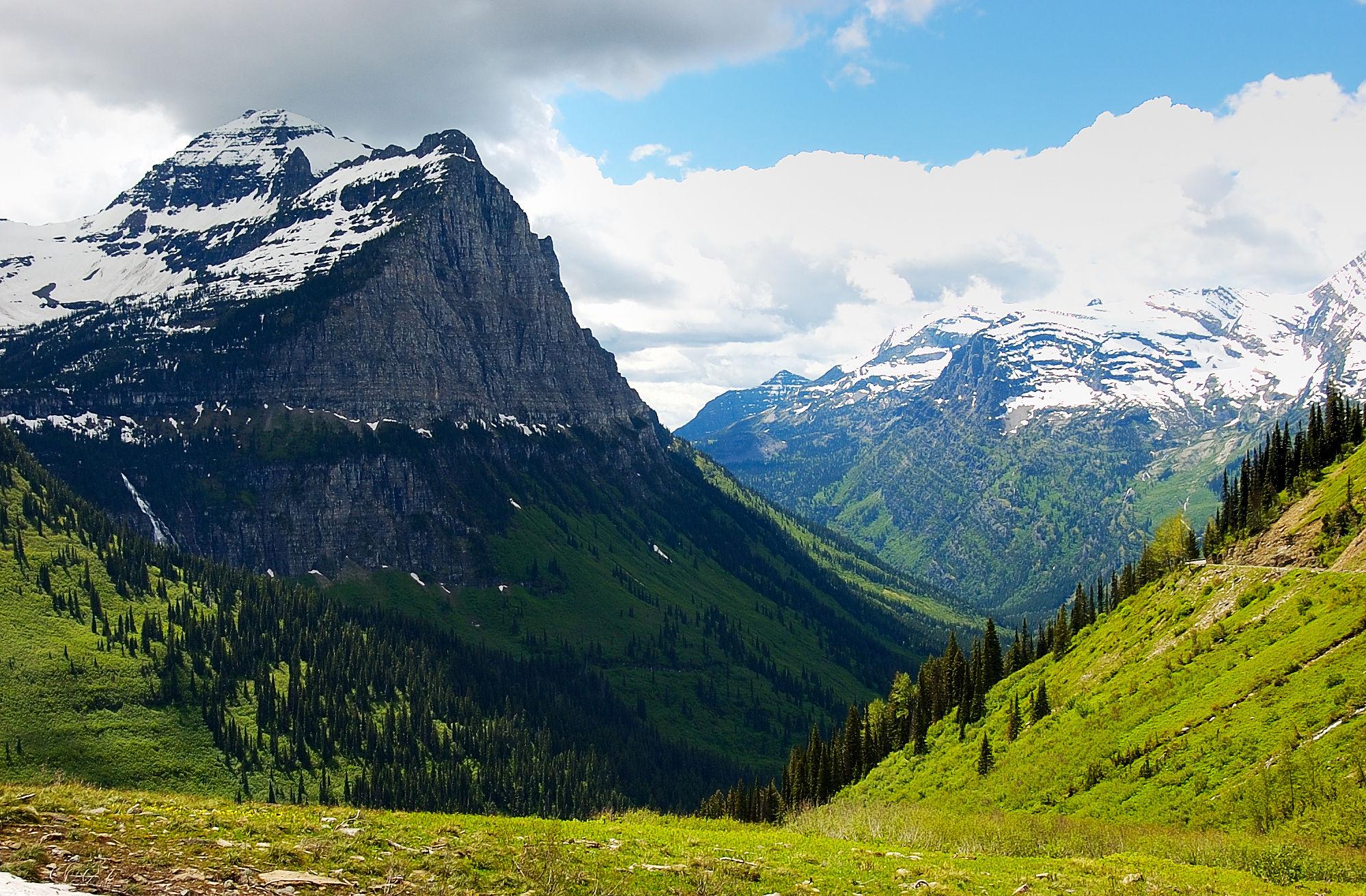
Winter Glacier is not a summer trip with snow added. It is a quieter, more limited experience built around solitude, dramatic weather, and a different rhythm.
For travellers who enjoy peaceful landscapes, winter can be special. The park feels much larger when fewer roads and trails are available. The challenge is that access changes, and visitors need to plan around conditions rather than a packed itinerary.
I would choose winter only if the slower pace is the attraction. If your dream trip is a full hiking schedule, another season will likely suit you better.
Spring transition when snow still shapes the trip
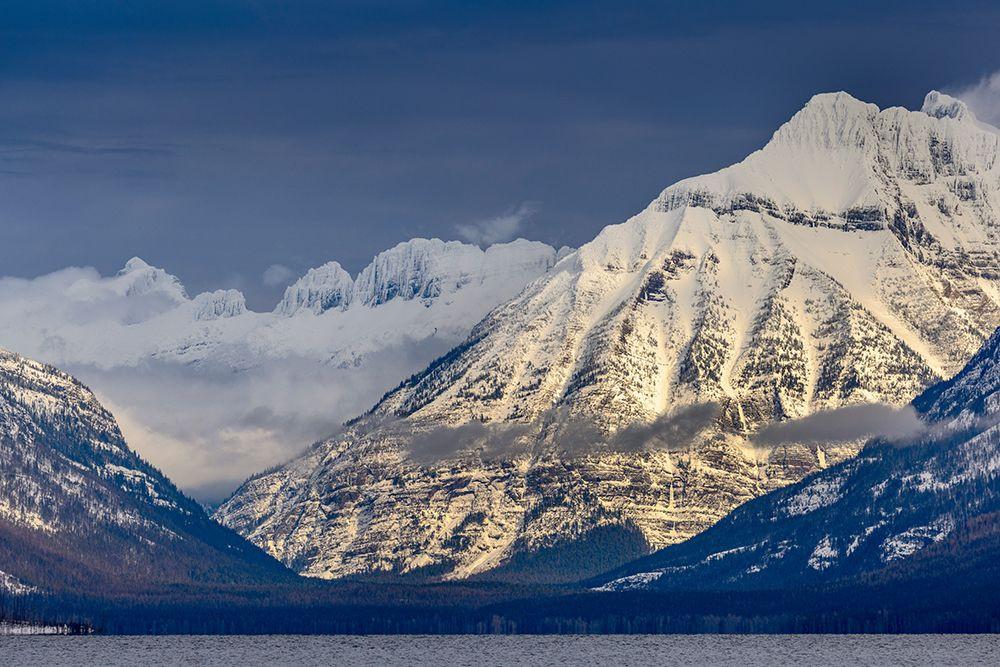
Spring is a season of change rather than a guaranteed opening. Lower elevations may begin showing fresh growth while higher areas remain snowy.
This period can reward flexible travellers who enjoy seeing the park wake up. It is less suitable for anyone expecting the full summer Glacier experience without summer conditions.
I like transition seasons because they show the character of a place. They also require better preparation: check updates, keep plans adjustable, and do not assume a clear road in town means a clear route in the mountains.
Mountain viewpoints for visitors focused on scenery
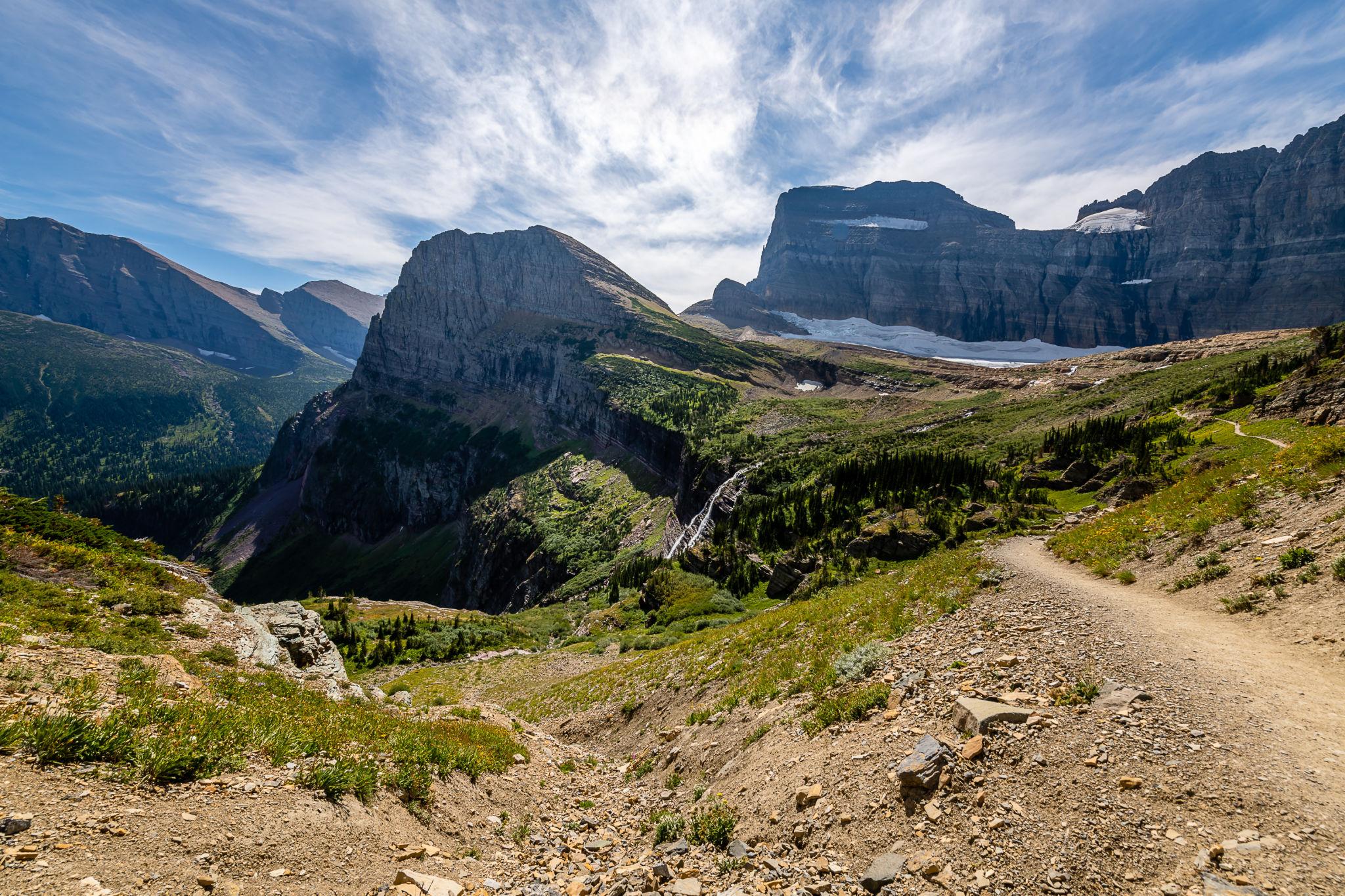
Some Glacier trips are about the view rather than the mileage. This style of visit suits travellers who want dramatic mountain landscapes, scenic drives when available, and short walks between viewpoints.
The best time for this approach is usually when access is broad enough to move around comfortably but before or after the heaviest visitor pressure. I always tell people to match the season to their priorities.
If you are travelling with mixed abilities in a group, this can be the smartest approach. Everyone gets a meaningful experience without needing the same hiking goals.
Wildlife season and patient observation
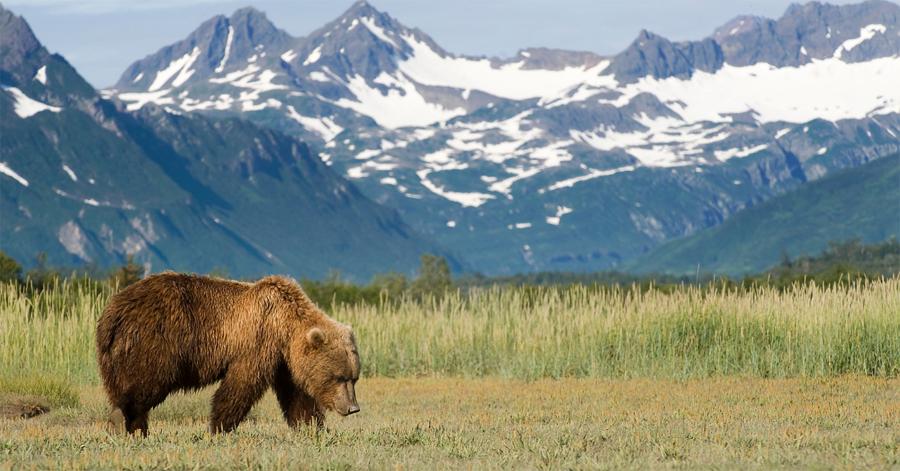
Wildlife adds another layer to choosing your month. Different seasons change animal behaviour, vegetation, and where visitors are likely to spot movement.
The important part is patience and distance. I treat wildlife viewing as a bonus, not a guarantee. The park is a living place, not a display arranged for arrivals.
This kind of trip works best when you leave room in the schedule. Rushing from one stop to another usually means missing the small moments that make a national park memorable.
Forest trails and recovery landscapes in autumn
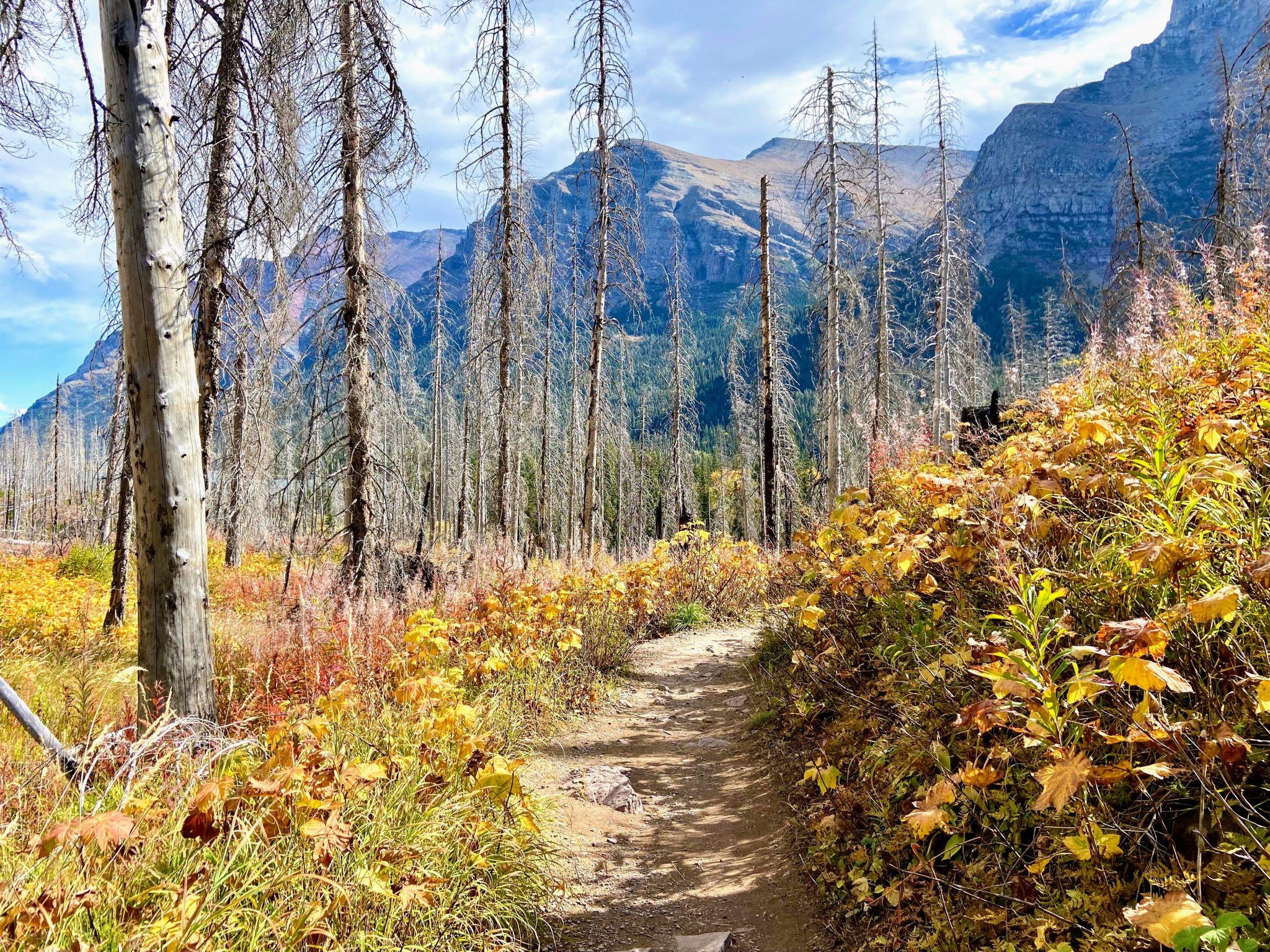
Autumn forest walks show another side of Glacier. Not every memorable park day requires a famous summit or a long exposed route.
I like these quieter landscapes because they reward visitors who slow down. They are also a good reminder that the best time to visit Glacier National Park is personal: a photographer, a serious hiker, and someone travelling with children may all choose different months.
My own planning rule is simple: pick the experience first, then pick the season. That avoids arriving in the right place at the wrong time.
Glacier is one of those places where timing shapes the entire trip. I would choose the month based on the experience I want, then build the itinerary around the conditions that season brings.





Common Questions
What is the best overall month to visit Glacier National Park?
For most first-time visitors, mid-summer offers the best balance of open trails and reliable access, but it is also the busiest period.
Is Glacier National Park worth visiting outside summer?
Yes. Autumn brings quieter trails and changing colours, while winter offers a peaceful experience, but access and activities are more limited.
How should I choose my travel month?
Start with your priority: hiking, scenery, fewer people, wildlife, or seasonal atmosphere. The best month depends on that choice.